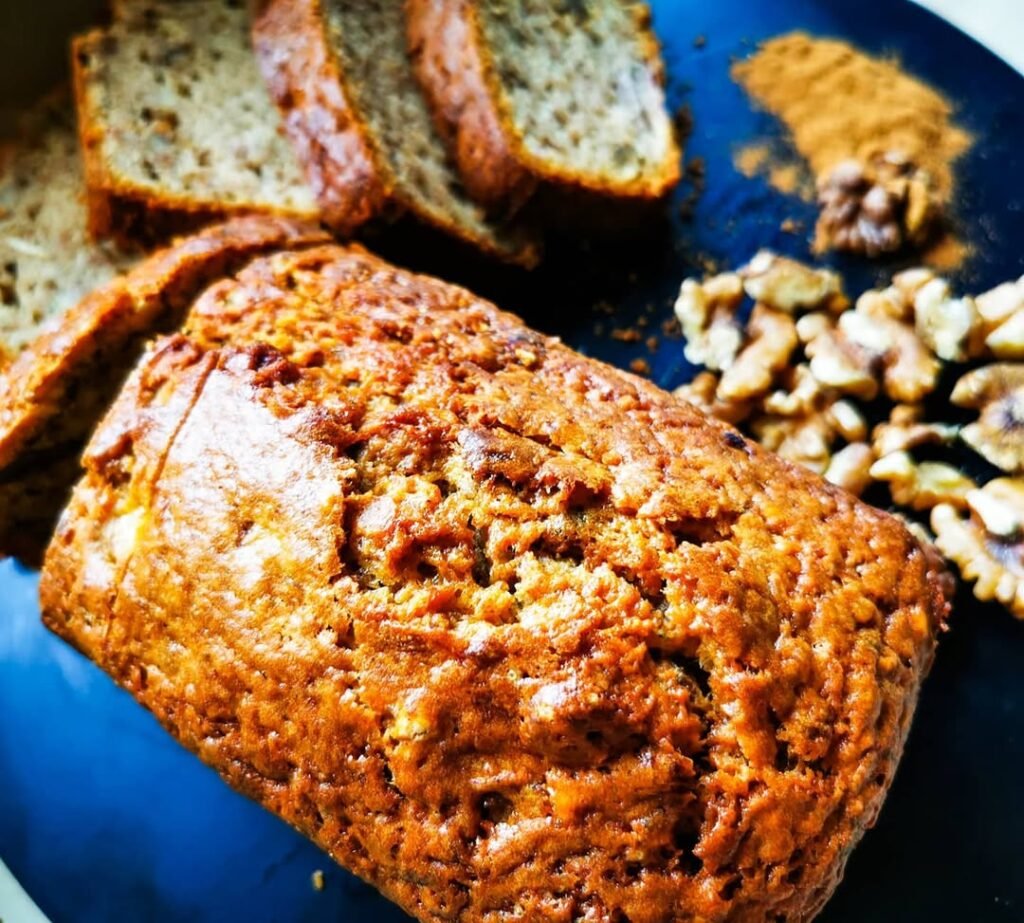
There’s something deeply comforting about the smell of banana bread baking in the oven. For me, it takes me straight back to slow Sunday afternoons, when overripe bananas on the counter meant only one thing: it was time to bake.
Over the years, I’ve tested countless variations from classic banana loaf to gluten-free versions, but I always come back to this simple, reliable recipe for banana nut bread made with self-rising flour.
What makes this version so special? It’s incredibly easy, perfectly moist, and beautifully tender every single time. Because we’re using self rising flour, there’s no need to measure separate leavening agents.
That means fewer ingredients, less fuss, and a foolproof, quick bread that even beginner bakers can master.
What is the recipe for Banana Nut Bread Made with Self-Rising Flour?
Banana nut bread is a classic American quick bread made with mashed ripe bananas and chopped nuts, most often walnuts or pecans.
Unlike yeast breads, quick breads rely on chemical leavening agents like baking powder to rise. In this recipe for banana nut bread made with self rising flour, the flour already contains baking powder and salt.
That simplifies the process and ensures consistent lift and structure. The result is a soft banana bread with walnuts that has a tender crumb and a beautifully domed top.
Compared to traditional banana bread made with all-purpose flour, this version:
- Requires fewer ingredients
- Comes together faster
- Has a slightly lighter texture
- Is ideal for beginner bakers
It’s the kind of moist banana nut bread you can whip up on a whim when you spot three spotty bananas on the counter.
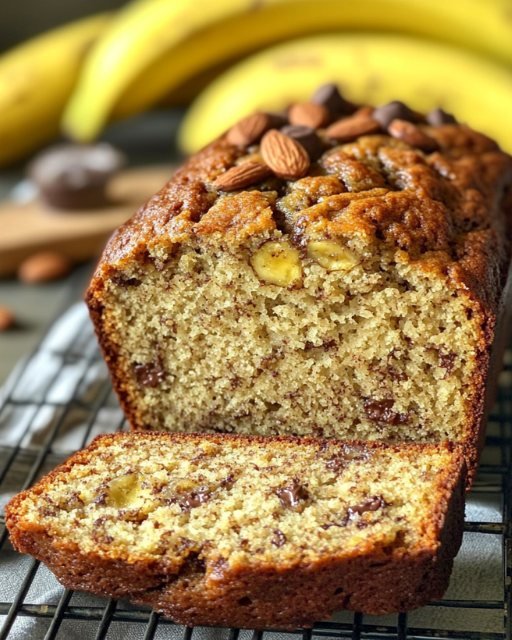
Why You’ll Love This Recipe
- Incredibly moist and tender texture
- Simple pantry ingredients
- Perfect use for overripe bananas
- No need for baking powder or baking soda
- Easy one-bowl banana bread method
- Customizable with mix-ins
- Freezer-friendly and great for meal prep
Whether you want a quick breakfast bread, an afternoon snack, or a cozy dessert, this homemade banana nut bread fits the bill.
Ingredients Overview
Here’s everything you’ll need to make this easy banana nut bread recipe:
- 2 cups (240g) self rising flour
Provides structure and built-in leavening. - 3 large ripe bananas (about 1 1/2 cups mashed)
The riper the better—brown spots mean more sweetness and moisture. - 1/2 cup (115g) unsalted butter, melted
Adds richness and helps create a moist crumb. - 3/4 cup (150g) granulated sugar
Sweetens and balances the banana flavor. - 2 large eggs, room temperature
Bind the ingredients and add structure. - 1 teaspoon vanilla extract
Enhances flavor and warmth. - 1/2 teaspoon ground cinnamon (optional)
Adds subtle warmth and depth. - 1 cup (100g) chopped walnuts
Classic nutty crunch. Pecans work beautifully, too.
Substitutions & Dietary Adaptations
- Dairy-free: Use melted coconut oil or vegan butter instead of butter.
- Lower sugar: Reduce sugar to 1/2 cup if bananas are very ripe.
- Gluten-free: Use a gluten-free self rising flour blend designed for 1:1 baking.
- Vegan: Replace eggs with flax eggs (1 tablespoon ground flax + 3 tablespoons water per egg).
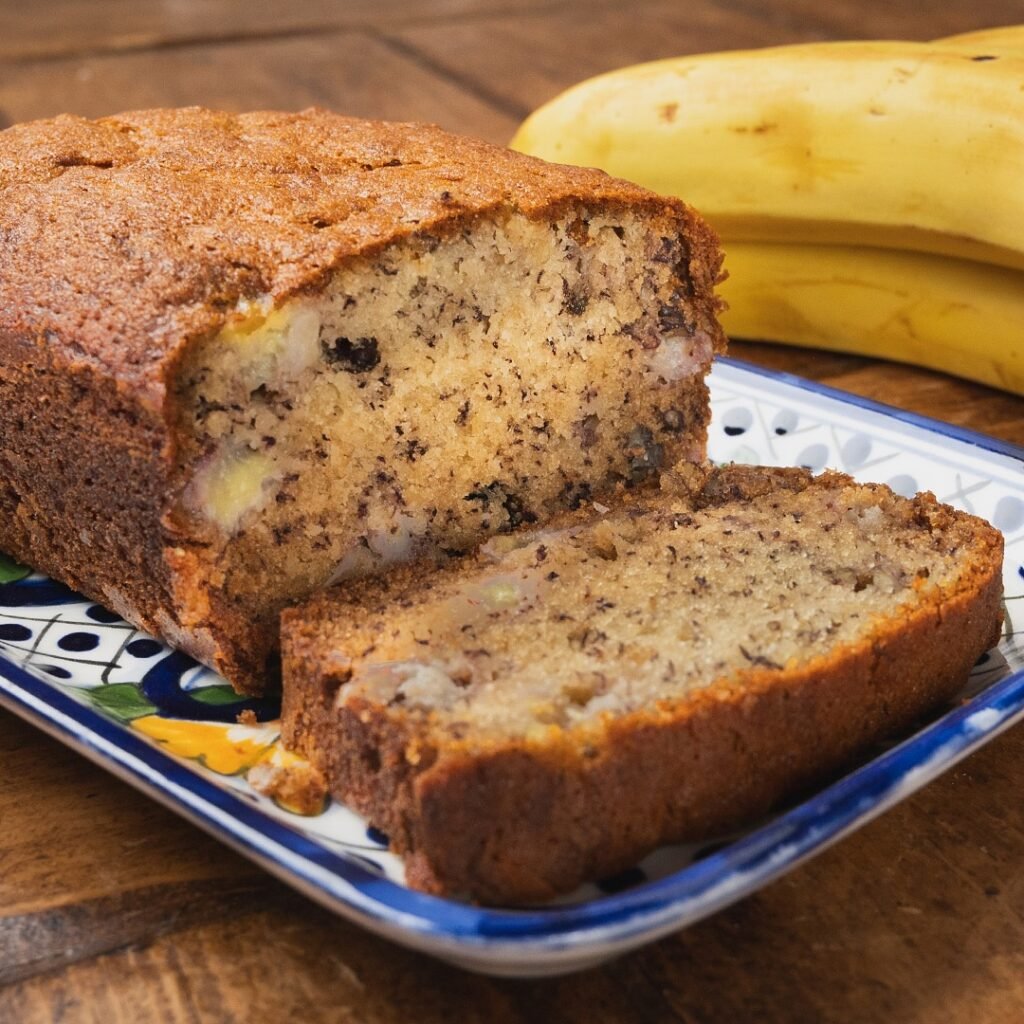
Step-by-Step Instructions
Preheat and Prepare
Preheat your oven to 350°F (175°C) for an even rise and perfectly golden crust. Proper temperature ensures your moist banana nut bread bakes evenly from center to edge.
Lightly grease a 9×5-inch loaf pan with butter or line it with parchment paper for effortless removal. This prevents sticking and protects the soft crumb.
While the oven heats, measure your ingredients precisely:
2 cups (240g) self rising flour,
3 large ripe bananas (1½ cups mashed),
½ cup (115g) melted butter,
¾ cup (150g) sugar,
2 large eggs,
1 teaspoon vanilla extract,
1 cup (100g) chopped walnuts.
Accurate preparation guarantees bakery-style texture, consistent structure, and foolproof results every time.
Mash the Bananas
In a large mixing bowl, add 3 large ripe bananas (about 1½ cups mashed). The darker the peel, the sweeter and more flavorful your moist banana nut bread will be.
Using a fork or potato masher, mash until mostly smooth. A few small lumps are ideal—they create authentic texture and natural banana pockets throughout the loaf.
Properly mashed bananas ensure balanced sweetness, rich aroma, and tender crumb. This step builds the foundation for a soft, bakery-style quick bread.
For best results, avoid underripe fruit. Overripe bananas deliver deeper flavor, enhanced moisture, and superior structure in this easy banana nut bread recipe made with self rising flour.
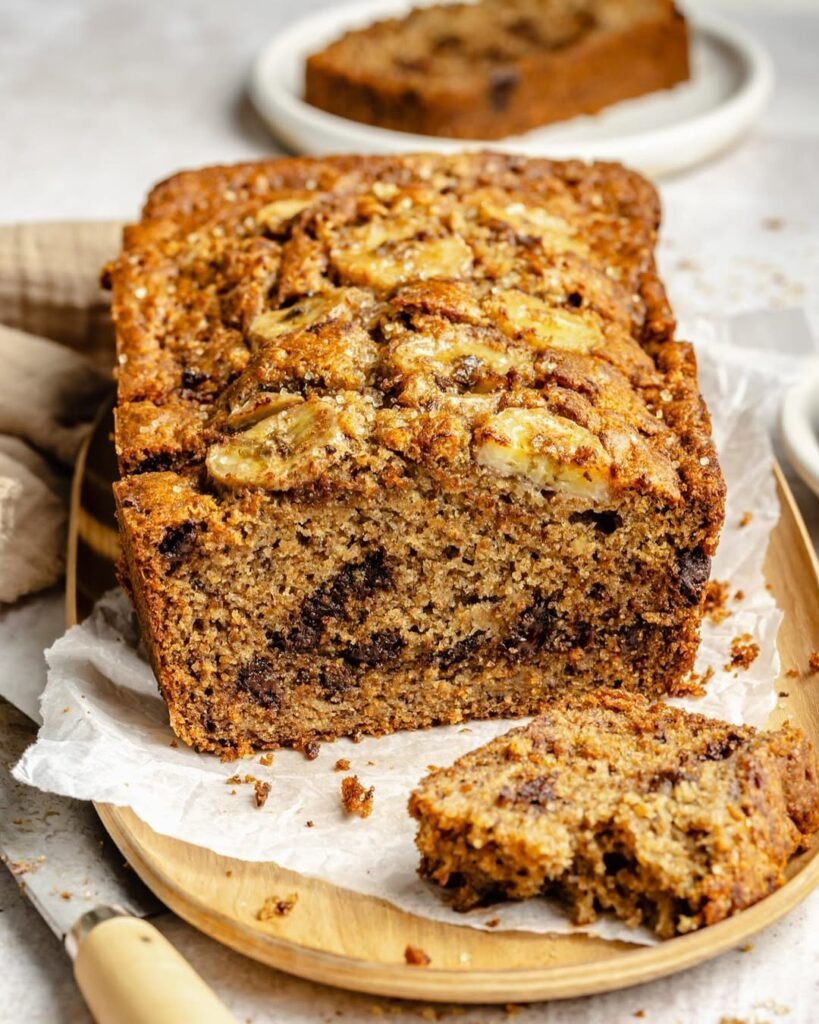
Mix Wet Ingredients
Add ½ cup (115g) melted unsalted butter to the mashed bananas and stir until fully combined. The warm butter blends smoothly, creating a rich, flavorful base for ultra-moist banana nut bread.
Next, mix in ¾ cup (150g)of granulated sugar to enhance sweetness and balance the natural banana flavor. Stir until the mixture looks glossy and cohesive.
Add 2 large eggs (room temperature) and 1 teaspoon vanilla extract. Whisk gently until smooth and creamy. This step builds structure, depth, and bakery-style tenderness.
A well-emulsified wet mixture guarantees even texture, superior rise, and consistent results in this easy recipe for banana nut bread made with self rising flour.
Add Dry Ingredients
Gradually add 2 cups (240g) self-rising flour to the wet mixture. Sprinkle it in batches rather than all at once to ensure even distribution and a light, tender crumb.
If using, add ½ teaspoon ground cinnamon for warm depth and enhanced bakery-style flavor. This subtle addition elevates the overall aroma without overpowering the bananas.
Using a spatula, gently fold the flour into the batter. Mix just until no dry streaks remain. Do not overmix—this is essential for soft banana nut bread with a delicate texture.
Proper folding preserves structure, prevents density, and guarantees a perfectly risen loaf every time.
Fold in Nuts
Add 1 cup (100g) chopped walnuts to the batter. For deeper, bakery-quality flavor, lightly toast the walnuts beforehand to unlock their rich, nutty aroma.
Using a spatula, gently fold the nuts into the mixture. Slow, deliberate strokes prevent overmixing and protect the soft, tender crumb. The goal is even distribution without deflating the batter.
Reserve 1–2 tablespoons of walnuts to sprinkle on top for a beautiful, golden finish and irresistible crunch.
Proper folding ensures balanced texture in every slice—moist banana interior paired with satisfying walnut bite—creating a premium, homemade banana nut bread that stands out from ordinary recipes.
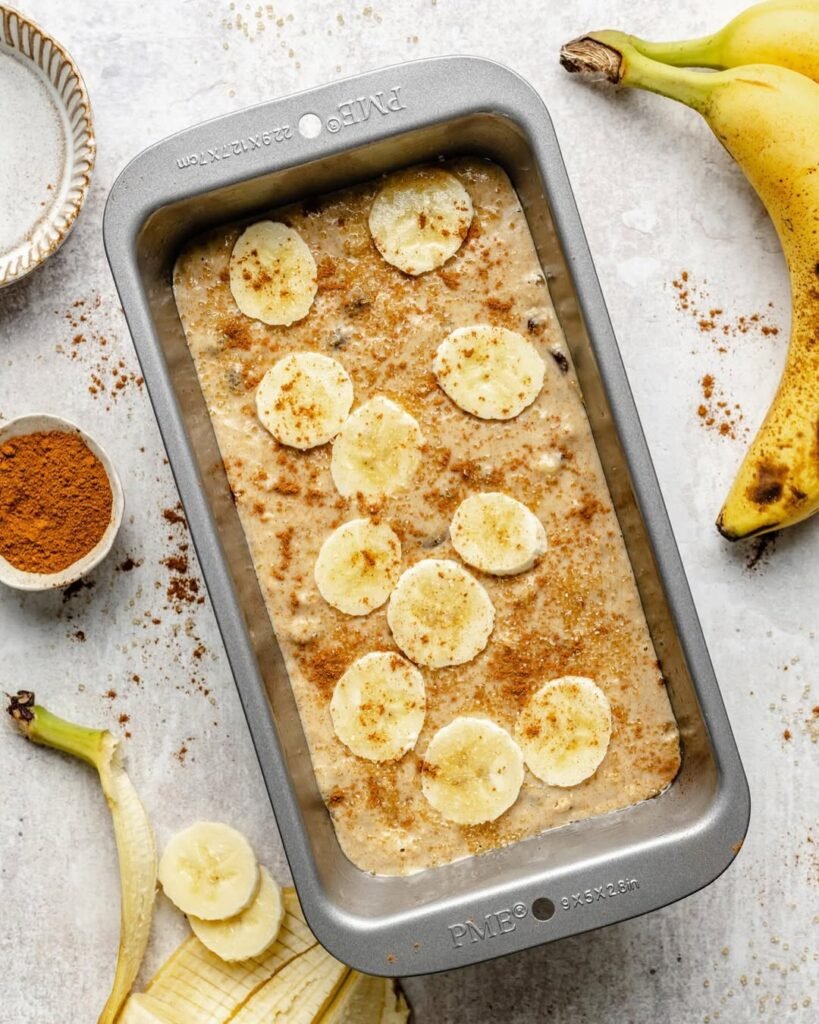
Bake
Pour the finished batter—made with 2 cups (240g) self-rising flour, 3 mashed bananas (1½ cups), ½ cup (115g) butter, ¾ cup (150g) sugar, 2 eggs, and 1 cup (100g) walnuts—into a prepared 9×5-inch loaf pan. Smooth the top evenly for a consistent rise.
Place in a preheated 350°F (175°C) oven. Bake for 50–60 minutes until golden brown and beautifully domed.
Insert a toothpick into the center. It should come out clean or with a few moist crumbs, not wet batter.
Proper baking time ensures a tender crumb, rich banana flavor, and perfectly moist banana nut bread every time.
Cool
Once baked, remove the loaf from the oven and let it rest in the pan for 10–15 minutes. This short cooling period allows the structure—built from 2 cups (240g) self-rising flour, 2 eggs, and 3 ripe bananas (1½ cups mashed)—to fully set.
Do not rush this step. Cutting too early can cause crumbling and excess moisture loss.
After resting, gently transfer the bread to a wire rack. Cool completely for at least 45–60 minutes before slicing.
Proper cooling locks in moisture, enhances flavor depth, and ensures clean, bakery-style slices with a tender crumb and crisp walnut texture throughout.
Expert Tips for Best Results
- Use Very Ripe Bananas: The darker and softer your bananas, the sweeter and more flavorful your banana bread will be. This is key to achieving that classic moist banana nut bread texture.
- Don’t Overmix: Overmixing develops gluten, which can make the loaf tough. Stir gently and stop once the flour is incorporated.
- Toast the Walnuts: For a deeper flavor, toast your walnuts in a dry skillet for 3–5 minutes before adding them to the batter.
- Check for Doneness Properly: Banana bread can look done on the outside but still be underbaked inside. Insert a toothpick in the center—not near the edges—for an accurate test.
- Let It Rest: Banana bread tastes even better the next day. The flavors deepen, and the crumb becomes even more tender.
Variations & Substitutions
- Chocolate Chip Banana Nut Bread: Add 1/2 cup semi-sweet chocolate chips for a sweeter twist.
- Cinnamon Swirl Banana Bread: Layer the batter with a mixture of 2 tablespoons sugar + 1 teaspoon cinnamon for a swirl effect.
- Maple Banana Nut Bread: Replace half the sugar with pure maple syrup for a richer flavor.
- Healthy Banana Nut Bread: Use half whole wheat self rising flour and reduce sugar slightly. Add 2 tablespoonsof Greek yogurt for extra moisture.
- Pecan Banana Bread: Swap walnuts for chopped pecans for a buttery crunch.
Storage & Make-Ahead Instructions
Room Temperature: Store tightly wrapped at room temperature for up to 3 days.
Refrigeration: Refrigerate in an airtight container for up to 1 week. Warm slices slightly before serving for the best texture.
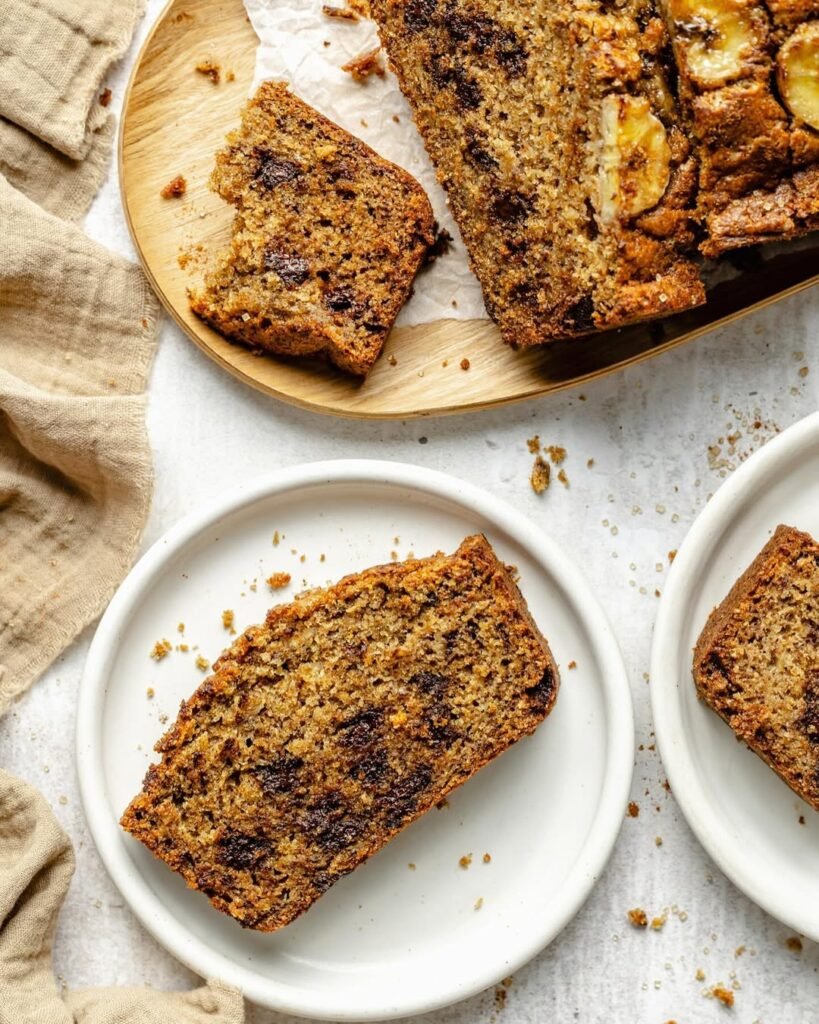
Freezing: Wrap the loaf (or individual slices) in plastic wrap and foil. Freeze for up to 3 months. Thaw at room temperature or microwave slices for 20–30 seconds. This makes it perfect for batch baking and meal prep.
Frequently Asked Questions (FAQ)
Can I make banana nut bread with self rising flour without baking soda?
Yes. Self-rising flour already contains baking powder and salt, so you don’t need to add additional leavening agents.
Why is my banana nut bread dense?
Overmixing the batter or using bananas that aren’t ripe enough can lead to a dense loaf. Mix gently and use very ripe bananas.
Can I use frozen bananas?
Absolutely. Thaw them first and drain excess liquid before mashing.
How do I make banana nut bread more moist?
Use very ripe bananas, avoid overbaking, and measure flour accurately. You can also add a tablespoon of sour cream or yogurt.
What nuts are best for banana bread?
Walnuts are traditional, but pecans are equally delicious. You can even mix both for added texture.
Can I turn this into muffins?
Yes. Divide batter into a lined muffin tin and bake at 350°F (175°C) for 18–22 minutes.
Final Thoughts
This recipe for banana nut bread made with self rising flour is the kind of dependable, no-fail recipe every home baker should have in their collection. It’s simple enough for beginners, yet delicious enough to impress guests.
The tender crumb, sweet banana flavor, and crunchy walnuts create the perfect balance of texture and taste.
Serve thick slices warm with a smear of salted butter, alongside coffee in the morning, or as a cozy afternoon snack. It’s also wonderful for brunch spreads, holiday gatherings, or gifting to neighbors.
If you try this recipe, I hope it becomes a staple in your kitchen the way it has in mine. There’s nothing quite like homemade banana nut bread—especially when it’s this easy and consistently perfect.